
Project Overview
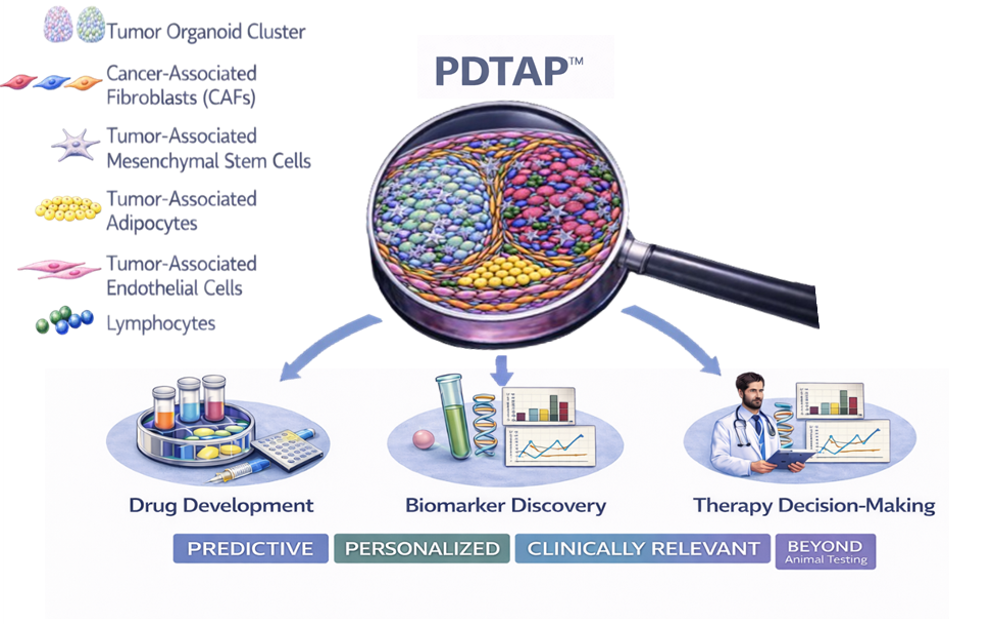
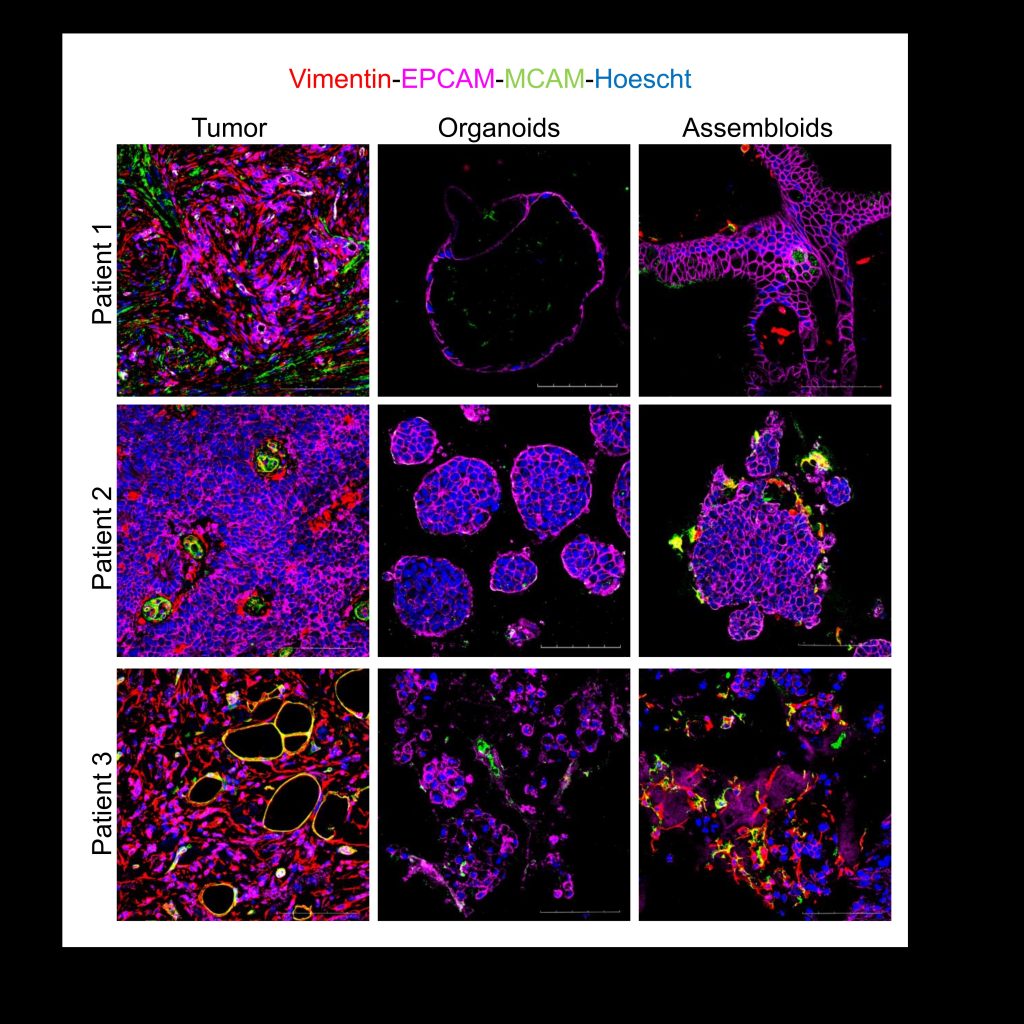
This project develops a Patient-Derived Tumor Assembloid Platform (PDTAP) that integrates patient-derived tumor organoids with matched stromal and immune components to reconstruct a physiologically relevant tumor microenvironment ex vivo. The platform preserves intra- and inter-tumoral heterogeneity, spatial cell–cell interactions, and patient-specific biological states, enabling faithful modeling of tumor behavior and therapeutic response.
By incorporating the tumor microenvironment into a unified 3D assembloid system, PDTAP serves as a translational model for studying tumor progression, immune evasion, and therapy resistance, and supports biomarker discovery, drug screening, and personalized oncology.
Research Focus
- Translational oncology using patient-derived functional models
- Tumor microenvironment (TME) biology and cell–cell crosstalk
- Precision oncology
- Mechanisms of therapy resistance
- Functional genomics of tumor–stroma–immune interactions
Experimental Approaches
- Establishment of 3D tumor assembloids incorporating patient-derived tumor organoids stromal fibroblasts and immune cell populations
- Multi-omics profiling including bulk and single-cell RNA-seq
- Whole-exome sequencing (WES) for genomic characterization
- Flow cytometry and immunophenotyping of immune/stromal compartments
- High-content imaging and morphology-based phenotyping
- Functional high-throughput drug screening (mono- and combination therapies)
- Cytokine profiling and secretome analysis to assess intercellular signaling
Principal Investigators: Dr. Gabriela Rozic, Dr. Igor Koman
Personalized Oncology Lab
Clinical Relevance
- Predicts patient-specific therapeutic responses to chemotherapy, targeted agents, immunotherapy, and combination regimens
- Identifies mechanisms of resistance driven by tumor–stroma and tumor–immune interactions within the microenvironment
- Enables functional validation of genomic and transcriptomic biomarkers in a patient-specific context
- Supports ex vivo testing of personalized treatment strategies prior to clinical decision-making
- Provides a scalable translational platform for drug discovery, patient stratification, and optimization of cancer treatment protocols
- Enhances the development of biomarker-guided precision oncology approaches through integrated functional and molecular readouts
Recent publications:
Irit Shapira-Netanelov , Olga Furman, Dikla Rogachevsky , Galia Luboshits, Yael Maizels , Dmitry Rodin , Igor Koman , Gabriela A Rozic , Patient-Derived Gastric Cancer Assembloid Model Integrating Matched Tumor Organoids and Stromal Cell Subpopulations, Cancers 2025 Jul 9;17(14):2287.