
A new study from the Institute for Personalized and Translational Medicine (IPTM) at Ariel University examines an important question: Does THC—the main psychoactive compound in cannabis—affect everyone in the same way, particularly when exposure occurs during adolescence, a critical period of brain development?
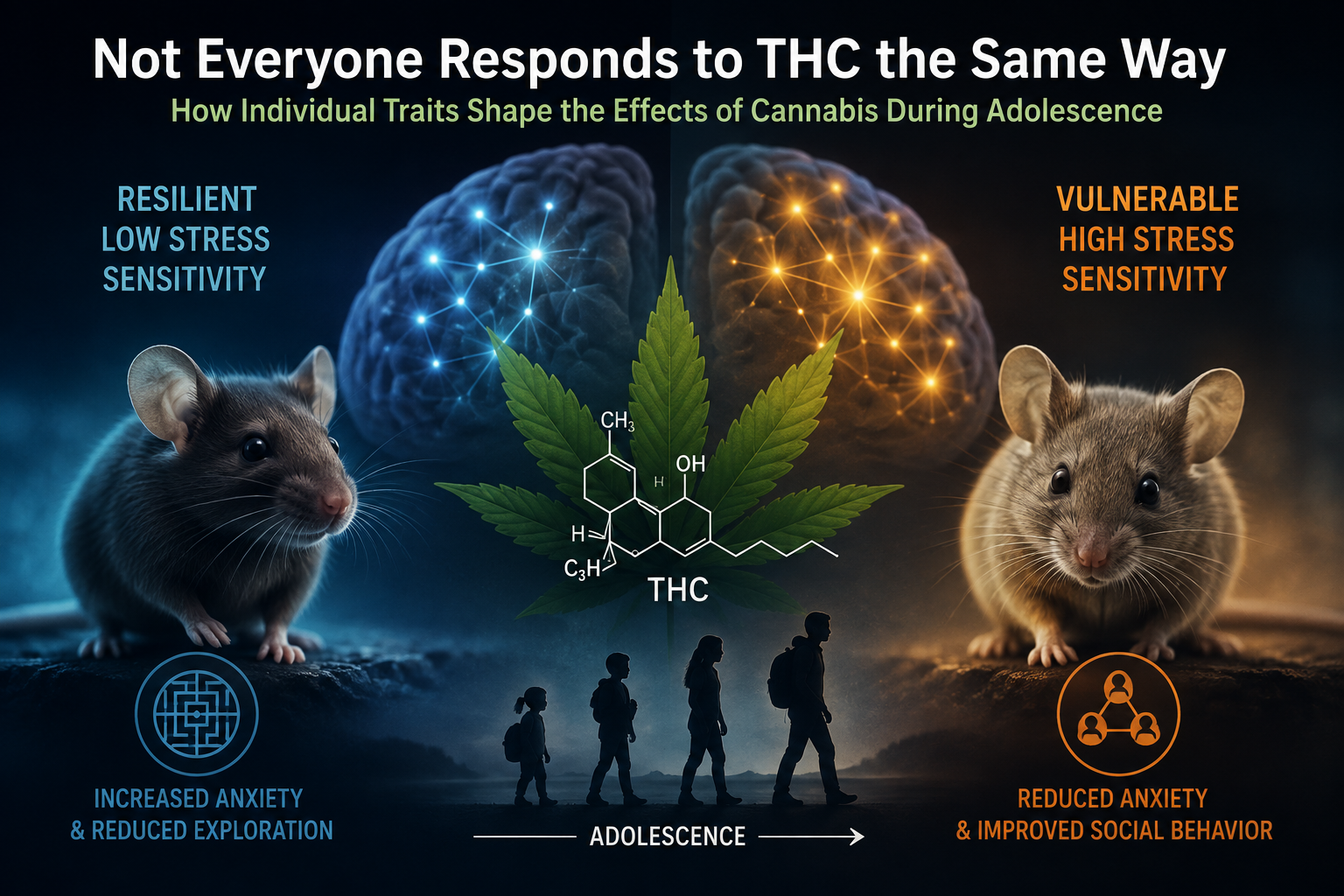
The researchers looked not only at exposure to THC, but also at individual differences between the animals. The study compared two groups of mice with different behavioral characteristics: mice that were more resilient to stress and mice that were more sensitive and vulnerable to stressful situations.
The mice were exposed to THC during adolescence and were later assessed in adulthood for a range of behaviors, including anxiety, exploration, memory, and social behavior. The results showed that the effects of THC differed significantly between the two groups. In some cases, THC improved certain behavioral measures in the more stress-sensitive mice, while producing opposite effects in the more resilient mice.
These findings suggest that the long-term effects of THC may depend not only on factors such as the age of exposure or the dose, but also on the individual characteristics of the organism. In other words, the same substance may affect different individuals in very different ways.
The study provides new insights into why individuals may respond differently to cannabis and supports the importance of taking individual differences into account when studying the effects of drugs. While the research was conducted in mice and further studies are needed to determine whether similar patterns occur in humans, the findings highlight an important principle of personalized medicine: understanding how individual characteristics can shape responses to a substance or treatment.