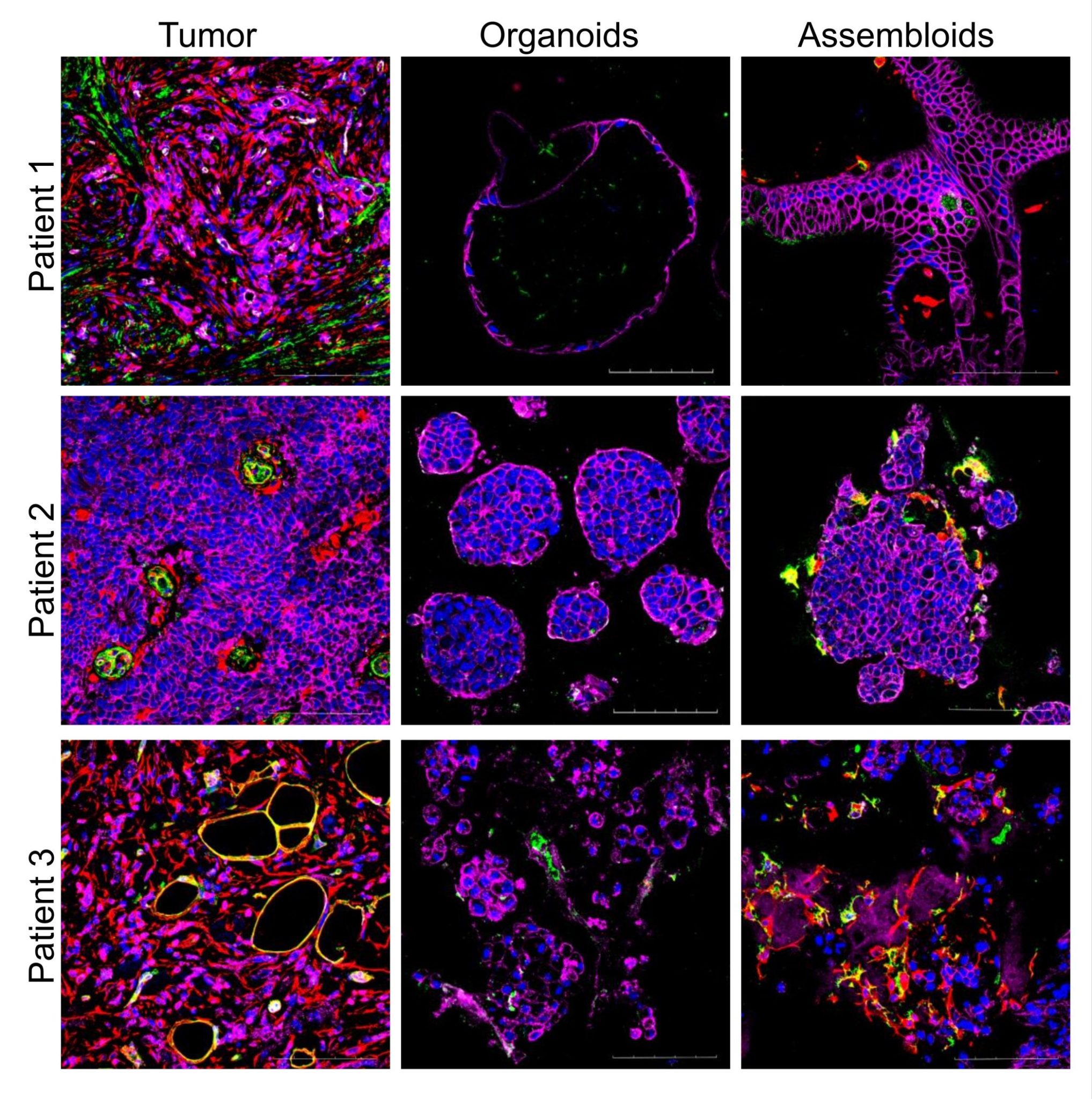

Studying cancer in the lab is not as simple as growing tumor cells in a dish. Real tumors are complex ecosystems made up not only of cancer cells, but also of surrounding “support” cells that influence how the tumor grows, spreads, and responds to treatment. Many existing lab models miss this complexity, which can lead to misleading results when testing new drugs.
In this study, researchers created a more realistic model of stomach (gastric) cancer using cells taken directly from patients. They didn’t just grow the tumor cells—they also included different types of surrounding cells, such as fibroblasts, stem-like cells, and blood vessel cells. Together, these were combined into a 3D structure called an “assembloid,” designed to closely mimic the real tumor environment.
The result was a model that behaved much more like actual tumors in the body. It showed a mix of different cell types and higher activity of genes linked to inflammation, tumor growth, and tissue remodeling—key features often seen in aggressive cancers.
When researchers tested drugs on this model, they found something important: some treatments that worked well on tumor cells alone were less effective when the surrounding cells were included. This suggests that the tumor’s environment plays a major role in treatment resistance.
The key takeaway: this advanced model provides a more accurate way to study cancer and test treatments. It could help scientists better understand why some therapies fail—and move us closer to truly personalized cancer treatment tailored to each patient.